The Shocking Truth About Transition Lenses in 2025
The Shocking Truth About Transition Lenses in 2025
Tired of constantly switching between your glasses and sunglasses? Modern eyewear has evolved beyond simple convenience into a seamless, high-fashion statement. This guide explores the incredible evolution of photochromic technology, revealing how today's lenses offer instant adaptation, comprehensive protection, and chic style. To solve this daily inconvenience, explore our complete collection of cutting-edge transition lenses and discover the perfect single-pair solution that adapts to every moment of your life.
【From Clunky to Chic: The Evolution of Transition Lenses】
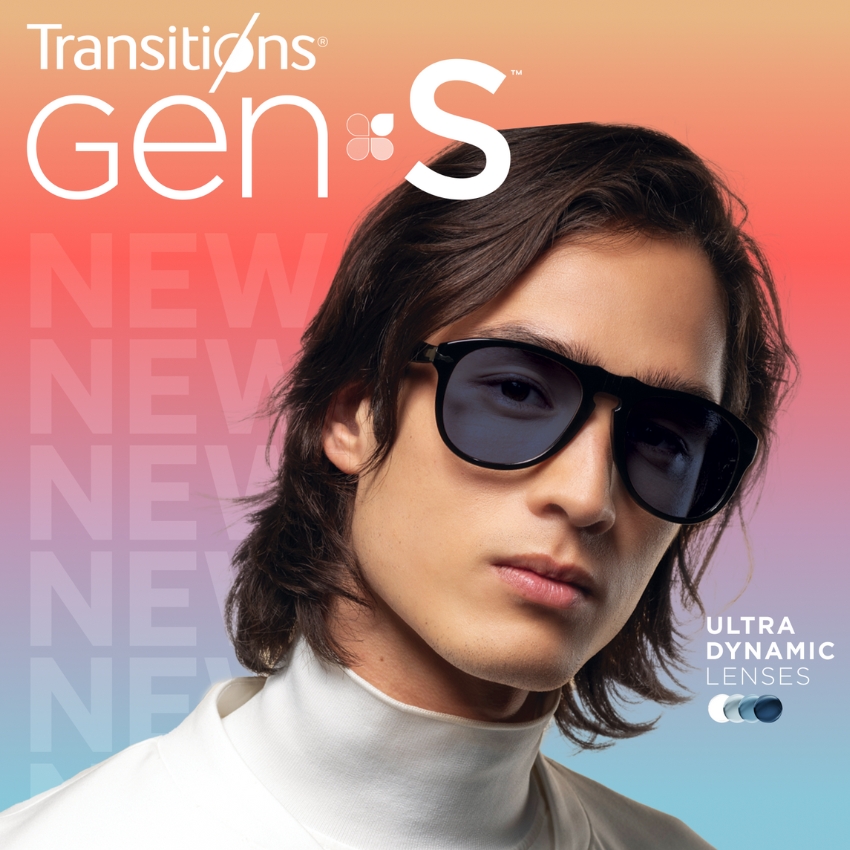
Have you ever wondered about the magic behind glasses that effortlessly transform into sunglasses the moment you step outside? This is the power of photochromic technology, a smart solution that has evolved from a simple convenience into a true style statement. Let's explore how these lenses work and why they've shed their old reputation for good.
What Exactly Are Photochromic Lenses?
At their core, photochromic lenses are an advanced type of eyewear designed to adapt automatically to changing light conditions. They provide clear vision indoors and at night, while functioning as sunglasses in bright, natural light, offering a seamless two-in-one experience.
How do transition lenses work- The science of light adaptive lenses that darken in sunlight.
The secret behind how transition lenses work is fascinating chemistry. Embedded within the lens are trillions of microscopic photochromic molecules. These molecules are transparent by default, allowing light to pass through freely when you're indoors.
When you step out into the sun, these molecules are exposed to ultraviolet (UV) radiation. This exposure triggers a chemical reaction, causing the molecules to change their structure. As they change shape, they begin to absorb visible light, which is why the lenses darken in sunlight. The brighter the sun, the more UV rays there are, and the darker your lenses will become.
This entire process reverses once you are out of the sun. Away from UV light, the molecules return to their original, transparent state. The best part? Modern light adaptive lenses complete this change faster and more efficiently than ever before.
A brief history- From a practical solution to a modern eyewear staple.
The journey of photochromic lenses began in the 1960s at Corning Glass Works. Initially, they were a groundbreaking but clunky invention—a practical solution for those with light sensitivity, but slow to react and often retaining a slight tint indoors.
For decades, the technology was seen as purely functional. However, relentless innovation has transformed these lenses. Through advancements in chemical formulas and manufacturing, they have become faster, clearer, and more stylish, cementing their place as a modern eyewear staple for people of all ages.
Debunking the Myths: Are Transition Lenses Still Uncool?
Let's address the old stereotype head-on. For a long time, transition lenses were perceived by some as "uncool" or old-fashioned. But in 2025, is that reputation still valid? The short answer is a resounding no.
The old "fuddy duddy" reputation and why it's a thing of the past.
The "fuddy-duddy" reputation came from early generations of the product. They were known for slow transition times, not getting dark enough in the car, and never becoming perfectly clear indoors. This left users in a state of perpetual, awkward half-tint.
Fortunately, that version of the product is a thing of the past. Today's photochromic lenses are a different breed entirely. They boast near-instant activation, become crystal clear indoors, and are available in a spectrum of stylish colors beyond the standard gray and brown, including trendy amber, emerald, and sapphire tints.
Expert Quote- Fashion hero Tim Gunn on embracing the technology with confidence.
Even fashion authorities agree that smart technology is the ultimate accessory. As style icon Tim Gunn would say, it's all about finding solutions that "make it work" for your life. True style is born from confidence and practicality.
Embracing eyewear that intelligently adapts to your environment is a perfect example of this philosophy. It's not just a pair of glasses; it's a piece of smart, responsive design. Choosing transition lenses is a confident choice that merges high function with modern form.
The evolution is undeniable. Today's adaptive lenses are no longer a compromise but a powerful enhancement to both your vision and your personal style. If you're ready to experience how this advanced technology can simplify and elevate your daily life, the best way is to see the latest options for yourself. To see the full range of stylish and high-performance options available in 2025, explore the newest collection of modern transition lenses.
【Next-Gen Tech: How 2025 Lenses Outperform the Past】
If you thought today's transition lenses were impressive, the advancements in 2025 are on another level. The technology hasn't just been refined; it has taken a quantum leap forward. The focus is no longer just on changing color but on delivering an instantaneous, seamless, and intelligent visual experience that feels like magic.
The Need for Speed: Exploring the Latest Transition Lens Technology
Let's be honest: the biggest historical complaint about adaptive lenses was the wait time. That lag is now a relic of the past. The latest transition lens technology is built for the pace of modern life, prioritizing speed and responsiveness above all else.
Transitions GEN S performance- A new benchmark in responsiveness.
Leading the charge in 2025 is the groundbreaking Transitions GEN S performance standard. This isn't a minor update; it's a complete reimagining of photochromic capability. It sets a new benchmark for how quickly and smoothly lenses should adapt to light.
These lenses are engineered to be ultra-responsive, reacting to UV light with unprecedented speed. The GEN S technology ensures that the molecules within the lens activate and deactivate faster than ever, creating a truly dynamic and fluid visual experience.
How quickly do transition lenses change- Darkening in seconds, not minutes.
So, just how fast are we talking? Modern light adaptive lenses darken in mere seconds. The moment you step into bright sunlight, the transformation begins, reaching full sunglass tint in a fraction of the time it took older generations.
This rapid change eliminates that awkward, in-between phase. You get instant protection and comfort right when you need it, making the switch from indoors to outdoors completely effortless.
Data Point- 88% of wearers in a 2023 study barely noticed the lens color change.
The goal of this new technology is to make the transition so smooth that you don't even think about it. The performance is so effective that it's practically unnoticeable.
In fact, the change is so fluid that a 2023 study revealed 88% of wearers barely noticed the lens color change as it was happening. This data point proves that modern adaptive lenses have achieved a level of sophistication where the technology works for you without ever being a distraction.
Beyond Photochromic: What Are Electrochromic Lenses?
Just when you think photochromic technology has peaked, a new frontier emerges. While photochromic lenses react automatically to UV light, electrochromic lenses offer a revolutionary alternative: user-controlled tint.
A new frontier- Lenses with electronically adjustable tints.
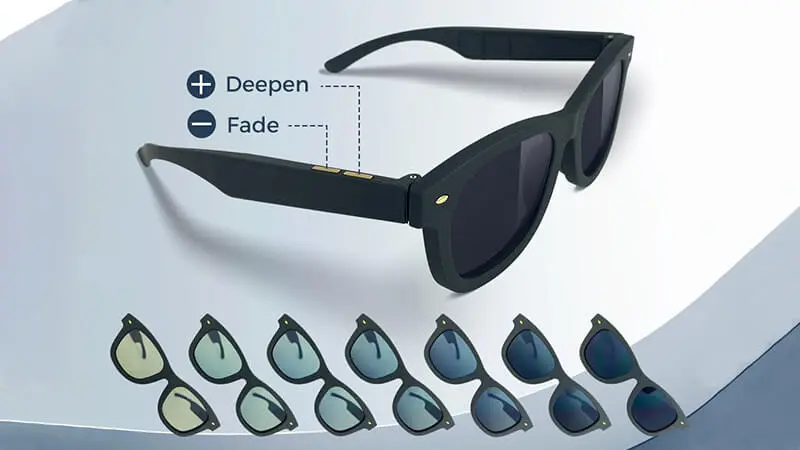
Imagine having the power to change your lens tint on demand. That's the promise of electrochromic technology. These lenses contain a special gel or crystal layer that changes transparency when a small, safe electrical charge is applied.
This means you are in complete control. Whether you're in a dimly lit room or direct sunlight, you can manually adjust the tint to your exact preference with the simple press of a button.
Tech Example- Gunnar's E-Shift Venture lenses allow for on-the-fly tint control.
To see this in action, look no further than products like Gunnar's E-Shift Venture lenses. These innovative glasses allow for on-the-fly tint control, giving the wearer the ability to switch between a clear state and a sunglass state instantly.
This level of control represents the ultimate in smart eyewear, adapting not just to the environment, but to your personal commands. Whether you desire the effortless automation of the newest photochromic lenses or the manual override of electrochromic tech, modern eyewear offers a solution. To discover which style of intelligent eyewear best suits your needs, seeing the latest advancements firsthand is the best approach. You can explore a wide variety of cutting-edge adaptive lenses to compare the very latest in vision technology.
【The Ultimate Verdict: Are Transition Lenses Worth It?】

After exploring the incredible technological leaps of 2025, we arrive at the ultimate question: are transition lenses truly worth the investment? The answer isn't a simple yes or no. It depends on a thoughtful look at your lifestyle, your priorities, and how you weigh convenience against the few remaining compromises.
For many, these intelligent lenses represent the pinnacle of eyewear evolution. For others, dedicated sunglasses might still hold an edge. Let's break down the final decision-making factors to help you find your clear-eyed answer.
Convenience vs. Compromise: Transition Lenses vs. Sunglasses
The core debate has always been straightforward: the all-in-one simplicity of transition lenses versus the specialized performance of a separate pair of sunglasses. But with today's technology, is it still a compromise?
The one-pair solution- The benefit of indoor and outdoor prescription glasses.
The primary benefit is undeniable: having one pair of prescription glasses that works perfectly indoors and outdoors is a game-changer. Think of a day spent running errands—moving from your home, to the car, into a bright parking lot, and then into a store. With a single-pair solution, your vision is comfortable and protected through every change.
You never have to remember to bring your sunglasses, nor do you have to juggle two different pairs. This seamless experience frees you up to focus on your day, not on your eyewear. It’s the ultimate expression of “set it and forget it” convenience.
A fair comparison- Do they get as dark as dedicated sunglasses?
This is one of the most common questions, and in 2025, the answer is a resounding "mostly, yes." Modern photochromic lenses, especially those meeting new performance benchmarks, can achieve a Category 3 level of darkness. This is the same standard of tint and UV protection found in most high-quality, general-purpose sunglasses.
While a specialized pair of glacier glasses might be darker, for everyday activities like driving, walking, or enjoying a patio lunch, today's transition lenses provide equivalent darkness and full UV protection. The days of weakly tinted adaptive lenses are long gone.
A Clear-Eyed View: The Pros and Cons of Transition Lenses
To make a truly informed decision, a balanced perspective is crucial. Here are the definitive pros and cons of integrating light adaptive lenses into your life.
Pro- Unmatched convenience and reduced risk of losing multiple pairs.
The convenience factor cannot be overstated. By consolidating two pairs of glasses into one, you simplify your life and significantly reduce the chances of misplacing or forgetting your expensive prescription sunglasses. It's one less thing to worry about.
This singular solution means your eyes are always protected from harmful UV rays, whether you consciously think about it or not.
Pro- Cost-effective by combining two eyewear needs into one.
From a financial standpoint, transition lenses are often the smarter buy. Purchasing one frame with a high-performance adaptive lens is typically more cost-effective than buying two separate pairs: one for clear prescription glasses and another for prescription sunglasses.
You’re essentially getting two pairs of glasses for the price of one premium set, making it a sound investment in both your vision and your wallet.
Con- Older technology could be slower to fade back to clear indoors.
One of the historical drawbacks was the lag time for lenses to fade back to clear after coming inside. It's important to note this is primarily a concern with older technology.
As discussed, the latest 2025 advancements have dramatically reduced this fade-back time to mere minutes, making the transition so smooth it’s often unnoticeable to the wearer. If you opt for the newest generation, this "con" is largely a thing of the past.
Con- Performance can be impacted by extreme temperatures or while inside a car.
This remains a valid consideration. Standard photochromic lenses react to UV light, and since most car windshields are designed to block UV rays, the lenses won't darken significantly while you're driving. Additionally, performance can be affected by extreme temperatures; they may get darker and fade slower in the cold, or get less dark in extreme heat.
Given these factors, the final choice comes down to your personal needs. If you spend hours driving every day, a dedicated pair of sunglasses might still be necessary. However, for most other situations, the benefits of modern technology are compelling. To make the best decision for your lifestyle, it's essential to see the full range of options, from the latest ultra-fast lenses to those designed for specific conditions. By exploring the variety of transition lenses available, you can directly compare features and find the perfect pair that balances convenience with your specific visual needs.
【More Than Meets the Eye: Health and Protection Benefits】

Beyond the sheer convenience, the health and protection features of modern transition lenses are arguably their most compelling advantage. In 2025, these lenses are not just about seeing clearly; they are a frontline defense for your long-term eye health, addressing modern-day concerns from sun exposure to screen time.
Your Ultimate Shield: Do Transition Lenses Protect from UV Rays?
Let's be clear: UV protection is not an optional extra; it's a non-negotiable standard for preserving your vision. The sun emits harmful ultraviolet (UV) radiation that can cause significant damage to your eyes over time. So, do these lenses offer adequate protection?
UV Protection- A non-negotiable feature for eye health.
Absolutely. One of the most critical data points is that high-quality photochromic lenses block 100% of harmful UVA and UVB rays. This applies whether the lenses are fully darkened outdoors or perfectly clear indoors, providing constant and reliable protection.
Data Point- Photochromic lenses block 100% of harmful UVA and UVB rays.
As any ophthalmologist would confirm, prolonged exposure to UV radiation is a leading risk factor for developing conditions like cataracts and macular degeneration. By wearing transition lenses, you are essentially equipping your eyes with a permanent, built-in shield against this invisible danger every time you step outside.
Expert Quote- An ophthalmologist's take on the dangers of UV radiation for eye tissues.
In our digital-first world, the "digital dilemma" is a real health concern. We spend hours staring at screens, exposing our eyes to high-energy blue-violet light. This can lead to digital eye strain, fatigue, and potential long-term effects. Do adaptive lenses help with this?
A Modern Concern: Do Transition Lenses Filter Blue Light?
The digital dilemma- Protecting eyes from screen-emitted light.
Yes, and they offer a uniquely comprehensive solution. The latest 2025 technology, such as that found in Transitions GEN S lenses, is engineered to filter blue light both indoors and out. They filter up to 32% of harmful blue-violet light from digital devices and artificial lighting indoors.
Data Point- Transitions GEN S lenses filter up to 32% of blue-violet light indoors and up to 85% outdoors.
When you go outside and the lenses darken, that protection becomes even more powerful, filtering up to 85% of blue-violet light from the sun. This dual-action filtering provides a seamless defense system for your eyes, no matter your environment.
Finding Relief: Solutions for Specific Needs
For individuals with specific visual challenges, adaptive lenses can be a life-changing solution. They go beyond simple vision correction to provide tangible relief and enhanced performance in daily life.
Transition lenses for light sensitivity- Reducing glare and enhancing visual comfort on bright days.
If you suffer from light sensitivity, also known as photophobia, you know how debilitating bright days can be. Transition lenses for light sensitivity automatically adjust to reduce harsh glare and sunlight, significantly enhancing your visual comfort without you having to do a thing. They dial down the intensity to a manageable level, allowing you to go about your day without squinting or discomfort.
Photochromic lenses for sports- Helping athletes like baseball players track fly balls without sun interference.
This technology also provides a competitive edge. Consider the benefits of photochromic lenses for sports. A baseball player can track a fly ball against a bright, glaring sky without interference, as the lenses instantly tint to improve contrast and reduce the sun's intensity. This quick adaptation helps athletes maintain focus and react faster. Whether you need relief from harsh sunlight or a clearer view on the field, understanding which features are available is key. Discovering the full range of photochromic lenses for sports allows you to find the specific technology designed to meet your health and performance needs, ensuring optimal protection and visual clarity.
【Eyewear Fashion 2025: How to Style Your Lenses】
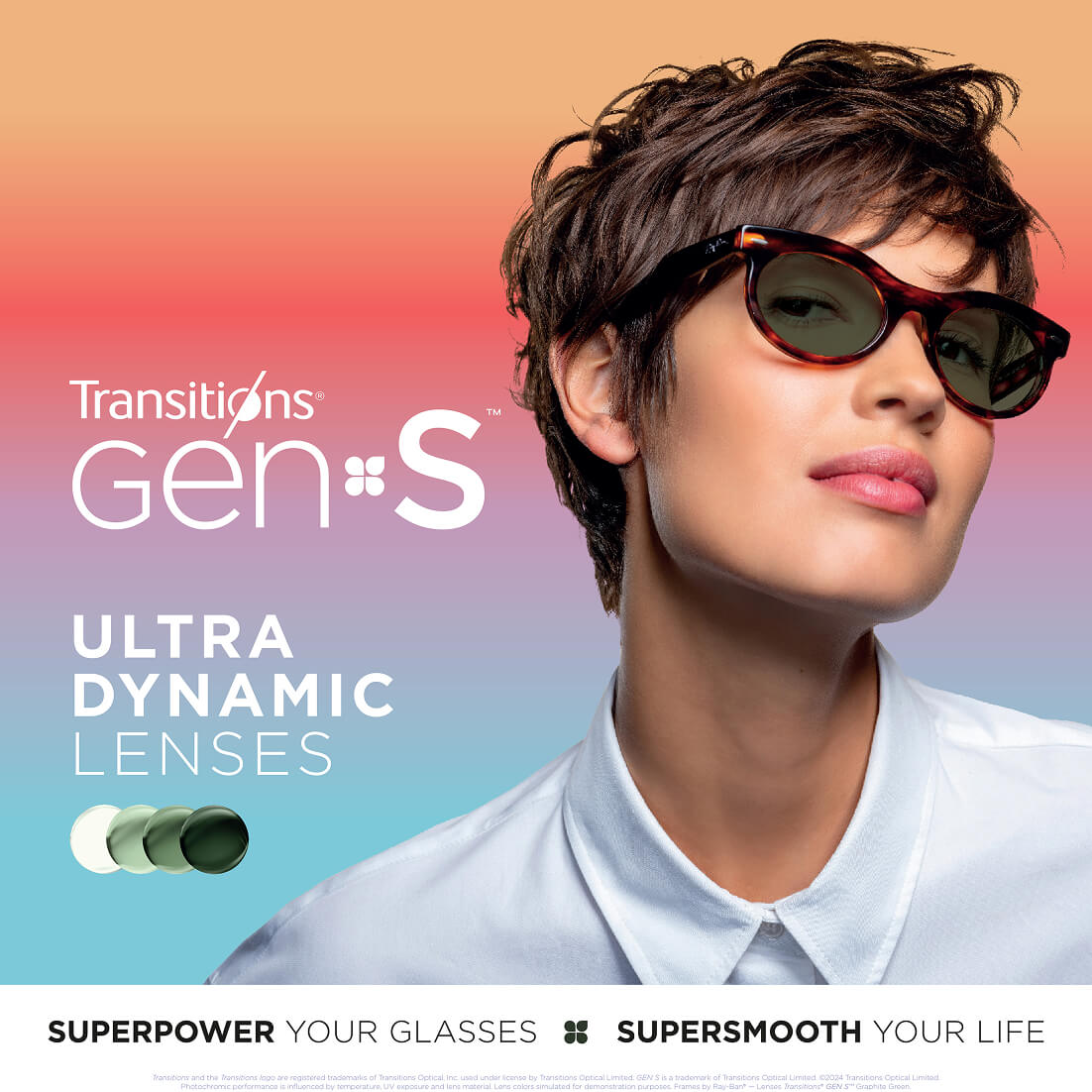
The conversation around eyewear has fundamentally shifted. What was once a purely functional medical device is now a core component of personal style. In 2025, your glasses are as much a statement piece as your handbag or shoes, and adaptive lenses are at the forefront of this evolution.
The Verdict is In: Are Transition Lenses Stylish in 2025?
Eyewear trends for glasses wearers- From a functional accessory to an "It-girl" status symbol.
Let's settle this debate once and for all: are photochromic lenses in vogue? The answer for 2025 is a resounding yes. Eyewear has transcended its practical origins to become an "It-girl" (and "It-guy") status symbol, and the versatility of transition lenses fits perfectly into our modern, multifaceted lives.
Trend Analysis- Spotted on the Spring/Summer 2025 street-style circuit.
Trend analysis from the Spring/Summer 2025 street-style circuit confirms this. Fashion insiders and influencers were spotted sporting frames that effortlessly adapted to changing light. This isn't just a trend; it's a practical fashion revolution.
Stylish photochromic glasses- The seamless shift from front row to after-party.
Imagine the seamless elegance of moving from a brightly lit fashion show front row to an evening after-party without ever needing to switch your glasses. With stylish photochromic glasses, your eyewear adapts with you, making them the ultimate accessory for a non-stop lifestyle where convenience and chic must coexist.
The Perfect Match: Best Frames for Photochromic Lenses
Frame selection is key- Finding a style that works as both clear glasses and sunglasses.
The secret to flawlessly pulling off this trend lies in the synergy between lens and frame. Because your glasses will function as both clear spectacles and sunglasses, frame selection is key. The right style must look just as intentional indoors as it does outdoors.
Style Tip- Retro revivals like the cat-eye and oversized bug-eye frames are making a comeback.
Here's a crucial style tip for 2025: retro revivals are having a major moment. Think bold, expressive silhouettes that make a statement whether the lenses are clear or dark. Chunky cat-eye frames and dramatic, oversized bug-eye shapes are perfect candidates, offering a look that feels both vintage-inspired and completely contemporary.
Brand Inspiration- High-fashion houses like Miu Miu, Prada, and Saint Laurent are embracing the trend.
You don't have to look far for inspiration. High-fashion houses like Miu Miu, Prada, and Saint Laurent are championing these unapologetically bold frames in their latest collections. The key is to find a frame that complements your face shape and personal aesthetic. Finding the perfect pair means you won't have to compromise on style. Exploring a curated collection of the best frames for photochromic lenses is the first step to ensuring your eyewear is perfectly suited for its dual role as both a vision tool and a high-fashion accessory.
【The Final Verdict: An Intelligent Choice for Modern Life】
In summary, the journey of photochromic lenses from a purely functional item to a sophisticated, stylish staple is complete. Modern advancements have addressed nearly all historical drawbacks, making them a compelling choice for a wide range of individuals in 2025. Key takeaways from this evolution include:
- Unprecedented Performance: The latest GEN S technology has revolutionized responsiveness, ensuring lenses darken in seconds and fade back to clear faster than ever, creating a seamless experience.
- Style Has Arrived: The old "fuddy-duddy" reputation is officially a thing of the past. With a vast array of stylish colors and compatibility with bold, fashion-forward frames, adaptive lenses are now a recognized style accessory.
- Comprehensive Health Protection: Beyond convenience, these lenses are a crucial health tool. They provide 100% protection against harmful UVA and UVB rays and offer significant blue light filtering both indoors and outdoors, safeguarding your long-term eye health.
- Cost-Effective Convenience: For many, investing in a single pair of high-quality adaptive lenses is more economical than purchasing separate prescription glasses and sunglasses, while eliminating the hassle of carrying and potentially losing multiple pairs.
While dedicated sunglasses may still be preferable for those who spend extensive time driving, the verdict is clear for most lifestyles: modern transition lenses are absolutely worth it. They offer an unmatched blend of convenience, protection, and style that simplifies daily life and enhances visual comfort. The technology has evolved to a point where the benefits overwhelmingly outweigh the few remaining compromises, solidifying their place as a smart, practical, and fashionable eyewear solution.
``` MjAyNTA3MjYxNjQ5MjY 当前显示MjAyNTA3MjYxNjQ5MjY。


Comments
Post a Comment